

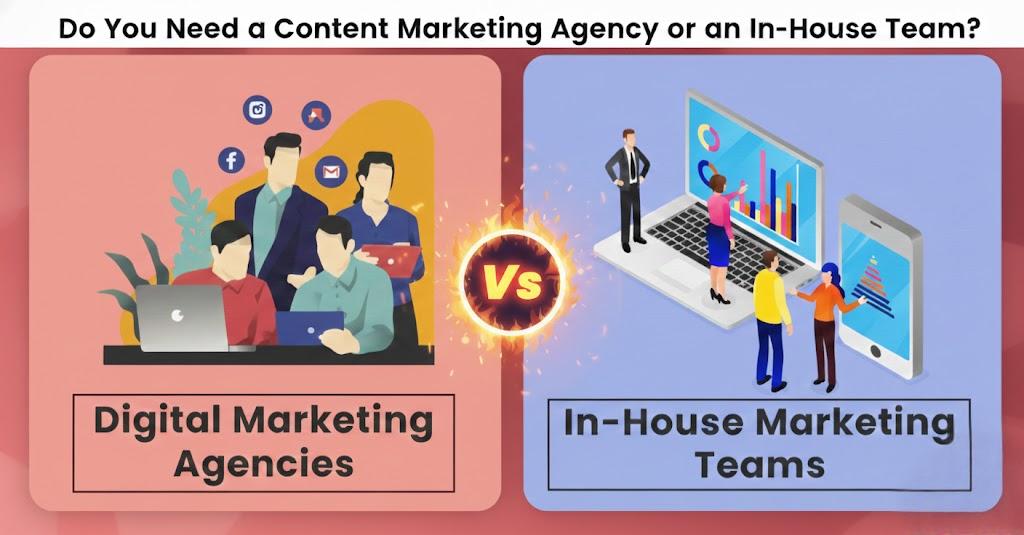

What Most Businesses Struggle With in Content Marketing
Most businesses struggle with content marketing not because they lack ideas, but because responsibility is unclear. Content often starts with good intentions, then slowly becomes inconsistent once priorities take over. Without a clear setup, content turns into something that is worked on “when there’s time,” instead of something planned with purpose. This is a common issue in content marketing Malaysia, across businesses of different sizes and industries.
In practice, this usually shows up in a few common ways:
- Content is produced irregularly, with long gaps between updates
- Topics are chosen based on assumptions, not actual business goals
- Visibility and traffic fluctuate because output is inconsistent
- Sales and marketing are not aligned on what content is meant to support
- No one is clearly accountable for planning, reviewing, and publishing
Another challenge is capacity. Many businesses assume content can be handled internally without assessing the time, skills, and coordination required. Others assume hiring externally will solve everything, without understanding how much internal input is still needed. In both cases, the decision is often made based on convenience instead of realistic capability.
What Does an In-House Content Team Do?
An in-house content team handles content as part of daily operations. Content work often sits alongside other responsibilities, which affects how much time and attention it receives. This setup can work, but only when expectations are clear and capacity is realistic.
At a high level, an in-house team is responsible for content production, internal coordination, and brand consistency. In practice, these responsibilities involve more work than many businesses expect.
1. Day-to-Day Content Production
In-house teams are responsible for producing content consistently. This includes planning topics, writing drafts, editing content, and publishing according to internal timelines. In content creation in digital marketing, this process also involves aligning content formats and platforms with business goals. Content often goes through multiple review rounds before it is published, which adds to the workload.
Because content production runs alongside other duties, delays are common when priorities shift or urgent tasks take over.
2. Internal Coordination With Sales and Product Teams
Content created in-house usually depends on close coordination with sales, product, or management teams. This involves gathering input, aligning messaging, and updating content as offerings or priorities change.
Without regular communication, content risks becoming disconnected from real sales conversations or current business goals, reducing its usefulness over time.
3. Brand Tone and Messaging Consistency
Maintaining a consistent brand voice across all content channels is another key responsibility. This includes website pages, blog articles, and supporting materials. When multiple people are involved, in-house teams must review content carefully to avoid mixed messaging or tone drift.
This requires clear guidelines and ongoing internal oversight
The Reality of Managing Content Internally
In practice, content creation services often compete with meetings and daily work. Content is planned with good intentions, then delayed when other tasks come up. This is common in B2B content marketing service setups, where content needs to support longer sales cycles and build trust over time.
An in-house setup works best when content has dedicated time, clear responsibility, and agreed expectations. Without this, output becomes irregular and difficult to maintain, even with capable internal teams.
What Makes an In-House Content Team Effective
An in-house content team works well only under specific conditions. When those conditions are missing, content usually slows down or stops. This is often overlooked when businesses compare internal teams with a digital content marketing agency.
An in-house setup tends to work when:
- There is a clear content process, with defined steps for planning, review, and publishing
- Content has dedicated time blocked weekly
- The team has enough headcount, so content does not rely on one person alone
Topics are planned in advance, instead of being decided last minute - Content output follows a steady schedule
- Sales or management provide timely input and approvals
- There is clear ownership, so one person is accountable for progress and deadlines
With these basics in place, content is easier to manage. Tasks move forward with fewer reminders, timelines are clearer, and publishing stays consistent. Teams know what needs to be done and who is responsible.
Common Problems With In-House Content Teams
When content is managed in-house, issues usually do not appear immediately. They surface gradually as workloads grow and priorities shift, especially in B2B content marketing service setups where content supports longer sales cycles and trust-building over time.
Limited Bandwidth
Content often competes with daily operations, internal meetings, and urgent tasks. When time is tight, content work is delayed first, even if it is considered important.
Content Pauses When Priorities Shift
Content output slows or stops during busy periods such as sales pushes, product launches, or internal changes. Once paused, it is difficult to restart without a clear plan or timeline.
Dependency on One or Two People
Many in-house setups rely heavily on one or two individuals. When those people are busy, on leave, or leave the company, content production stalls completely.
Lack of Long-Term Planning
Content is often planned week by week instead of in advance. This makes it harder to maintain consistency and easier for content to be dropped when schedules change.
Slow Review and Approval Cycles
Content may be ready but not published due to delayed feedback or approvals. Over time, this creates bottlenecks and reduces momentum compared to the structured workflows of a content marketing agency.
Unclear Ownership
When responsibility is shared across teams, no one is fully accountable for progress. Tasks are postponed because ownership is assumed rather than defined.
How a Content Marketing Agency Actually Works
A content marketing agency brings structure and continuity to content work that is often fragmented internally. Instead of content being handled between other priorities, agencies treat it as a dedicated function with defined processes, timelines, and accountability.
The difference is not effort. It is how content work is organised and sustained over time.
How Agencies Structure Content Work
Area | How Agencies Typically Handle It |
Planning | Content calendars are planned in advance with clear themes, goals, and timelines |
Execution | Writing, editing, and publishing follow a repeatable workflow |
Ownership | Clear responsibility for progress, deadlines, and delivery |
Reviews | Structured review cycles instead of ad-hoc feedback |
Publishing | Output continues even during busy periods or internal changes |
This structure reduces delays caused by shifting priorities and removes reliance on a single individual to keep content moving.
Consistency and Output Over Time
Challenge In-House | How Agencies Address It |
Content pauses when workload increases | Output continues because content is the primary focus |
Work depends on one or two people | Teams are distributed, reducing dependency risk |
Publishing becomes irregular | Schedules are maintained as part of delivery |
Content restarts require effort | Momentum is maintained without repeated resets |
Consistency is one of the most noticeable differences businesses experience when working with an agency.
Experience Across Industries and Business Stages
Experience Area | Practical Impact |
Industry exposure | Faster understanding of what works and what does not |
Different business stages | Better judgement on what level of content is realistic |
Common mistakes | Fewer trial-and-error decisions |
Benchmarking | Clearer expectations on output and timelines |
This experience shortens the learning curve and helps avoid repeating problems that other businesses have already encountered.
For businesses assessing external support, reviewing established providers can help clarify how agencies position their services in practice. This overview of the Top 10 Content Marketing Agencies in Malaysia provides a useful reference point when comparing approaches, structure, and delivery models.
Where Agencies Add the Most Value
- Strategy and Planning Discipline
Agencies plan content ahead instead of deciding week by week. Topics, timelines, and output are agreed early, which reduces last-minute changes and stalled work. - Consistent Execution
Content is produced and published through a routine. Work continues even when internal teams are busy or priorities shift. - Speed and Scalability
Agencies can work on multiple pieces at the same time. Output increases without relying on a single person’s availability. - Reduced Trial and Error
Decisions are guided by past experience across different projects. Common mistakes are avoided, and progress is faster. - Continuity
Content does not stop because someone is on leave or reassigned. Publishing stays steady over time. - Clear Ownership
Responsibility for delivery sits with the agency. Deadlines are managed without constant internal follow-ups.
What Agencies Are Not Designed For
- Deep Internal Context
Agencies are not involved in daily operations. They rely on input from the business to keep content accurate and relevant. - Daily Internal Coordination
Agencies do not sit in internal meetings. Alignment needs to be scheduled and structured. - Ad-hoc Last-minute Requests
Agencies work best with planned timelines. Frequent urgent changes can disrupt output. - Fast Approvals
Publishing depends on client feedback. Delayed reviews slow progress. - Frequent Direction Changes
Agencies rely on stable goals. Constant changes increase rework and friction.
Which Should You Choose? In-House vs Agency
Decision Factor | In-House Content Team | Content Marketing Agency |
Execution speed | Speed depends on internal workload. Content slows during busy periods, launches, or operational issues. | Execution follows a fixed workflow. Output continues regardless of internal distractions. |
Planning discipline | Planning is often short-term and adjusted week by week. | Content is planned ahead with agreed timelines and delivery expectations. |
Content consistency | Output fluctuates based on time, people, and shifting priorities. | Publishing remains steady because content delivery is the primary focus. |
Cost structure | Fixed monthly cost tied to salaries, regardless of how much content is produced. | Cost is tied to scope and delivery, not internal headcount. |
Scalability | Scaling output usually requires hiring or reallocating internal resources. | Output can scale without adding internal staff. |
Flexibility | Quick internal changes are possible, but they compete with other responsibilities. | Changes require alignment, but execution is predictable once agreed. |
Dependency risk | High dependency on one or two individuals. Leave or turnover can stop output. | Lower dependency risk due to team coverage and shared responsibility. |
Internal context | Deep understanding of products, customers, and internal goals. | Requires structured input to maintain accuracy and relevance. |
Process ownership | Often shared across teams, which can blur accountability. | Clear ownership sits with the agency for timelines and delivery. |
Review and approvals | Reviews happen informally and can cause delays. | Reviews are structured into the workflow with defined checkpoints. |
Long-term sustainability | Harder to maintain without dedicated time and headcount. | Easier to sustain over time with defined scope and cadence. |
Operational disruption | Content pauses during internal changes or staffing shifts. | Content continues through transitions and busy periods. |
What This Comes Down To
If your team needs constant internal input and quick changes, an in-house setup can work, provided there is enough time and ownership to support it. Without that, content often slows down or gets pushed aside.
If consistency, structure, and continuity matter more, working with a content marketing agency usually fits better. Content continues even when internal focus shifts or workloads increase, which is a common challenge for many teams.
The choice is less about preference and more about capacity. It’s more about how much time you have, how stable your workload is, and how often priorities change will usually point you in the right direction.
How Content Planning Influences Website Structure
Content does not perform on its own. It relies on structure, layout, and flow to work properly. When content ownership is unclear, websites are often built without thinking about how content will be planned, updated, or expanded over time. This leads to pages that look fine at launch but become difficult to manage later.
Websites work best when they are designed to support real content workflows. This includes how pages are structured, how content is added, and how different sections connect as the site grows. When content is treated as an afterthought, website planning tends to focus only on visuals, not long-term use.
Conclusion
This is why content ownership, website structure, and overall scope tend to be closely linked. Gaining clarity on what is actually included in a website build helps avoid misalignment later on, which is covered in more detail in What Do Website Design Services in Malaysia Include?. Cost is shaped by these same structural decisions, especially when planning for long-term use, which is explained further in How Much Does a Website Cost in Malaysia?.
If you are weighing your options and want to think through how content and website planning fit together in your situation, having a conversation early can help bring clarity. Contact us to understand the implications before decisions are locked in.
FAQs
1. Is it better to hire a content marketing agency or build an in-house team?
It depends on your internal capacity and consistency needs. An in-house team works well when there is dedicated time, clear ownership, and stable output. A content marketing agency is often a better fit when consistency, structure, and continuity are needed without adding internal workload.
2. What does an in-house content team usually handle?
An in-house content team typically handles content planning, writing, editing, internal coordination with sales or product teams, and maintaining brand tone. These responsibilities are managed alongside other daily business tasks, which can affect output consistency.
3. When does working with a content marketing agency make more sense?
Working with a content marketing agency makes sense when content needs to be produced consistently, when internal teams lack time or capacity, or when content pauses frequently due to shifting priorities.
4. Can businesses use both an in-house team and an agency?
Yes. Many businesses use a hybrid setup where internal teams provide direction and approvals, while an agency handles planning, execution, and publishing. This approach helps reduce workload while keeping content aligned with business goals.
5. How does content ownership affect website planning and cost?
Content ownership affects how a website is structured, how flexible it is to manage, and how easily it can scale. Poorly defined content responsibility often leads to website rework, additional scope, and higher long-term costs.